Class II · Mandibular advancement
Mandibular advancement design.
Protocol-based. Print-ready.
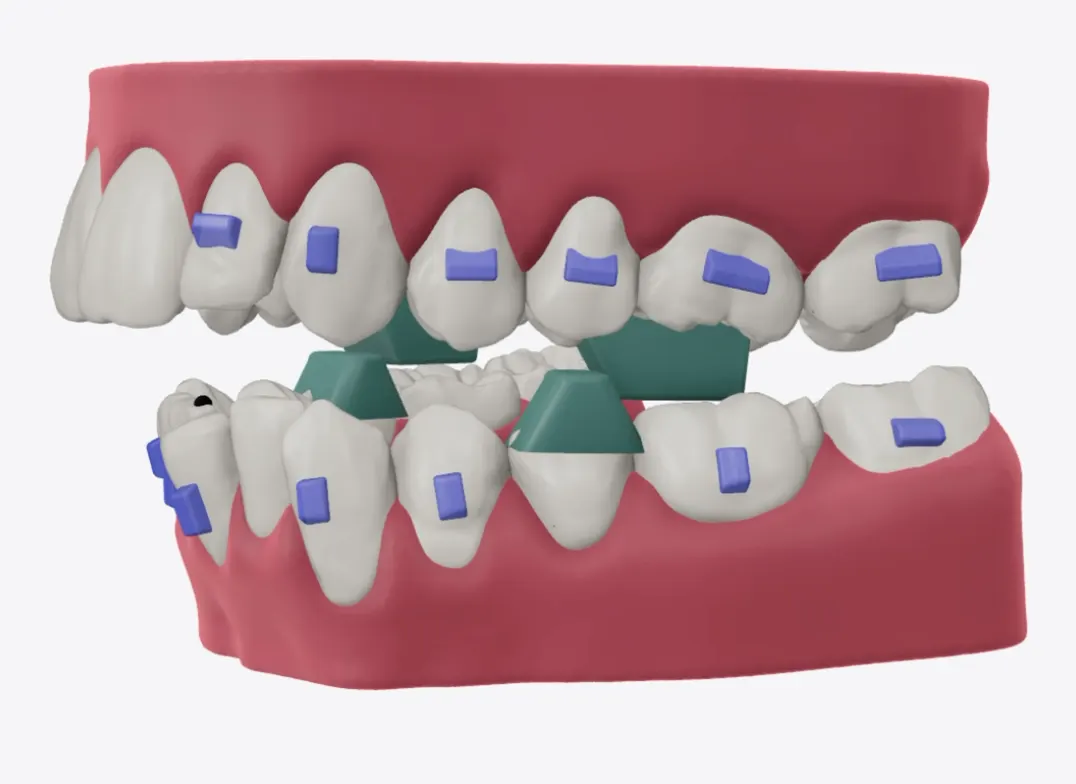
Mandibular advancement trays, thermoformed. A thin, clear, easy-to-remake functional appliance for growing and non-growing patients.
Runs in your browser. Nothing to install.
How it works
Five steps,
in a few minutes.
- 01
Upload the scans
Upper and lower arches, any scanner.
- 02
Align teeth (or not)
With aligners, or twin block only.
- 03
Construction bite
Advancement and opening, in mm.
- 04
Block placement
Automatic, then adjustable.
- 05
Print and thermoform
In-house or at your partner lab.
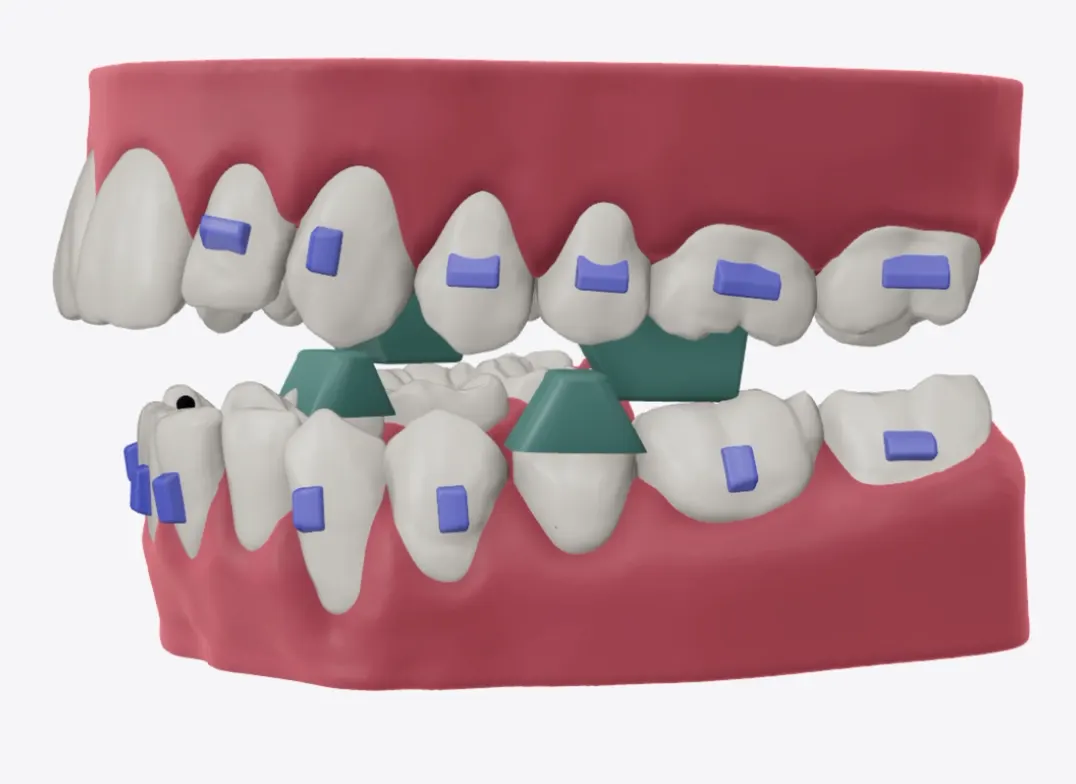
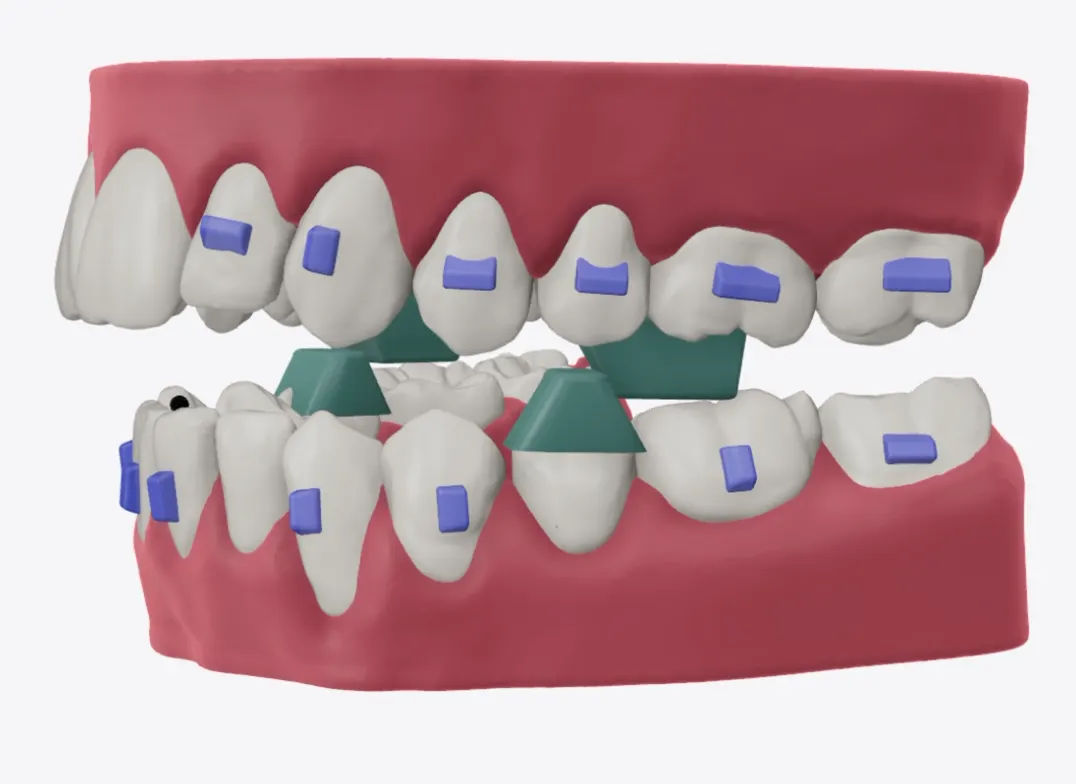
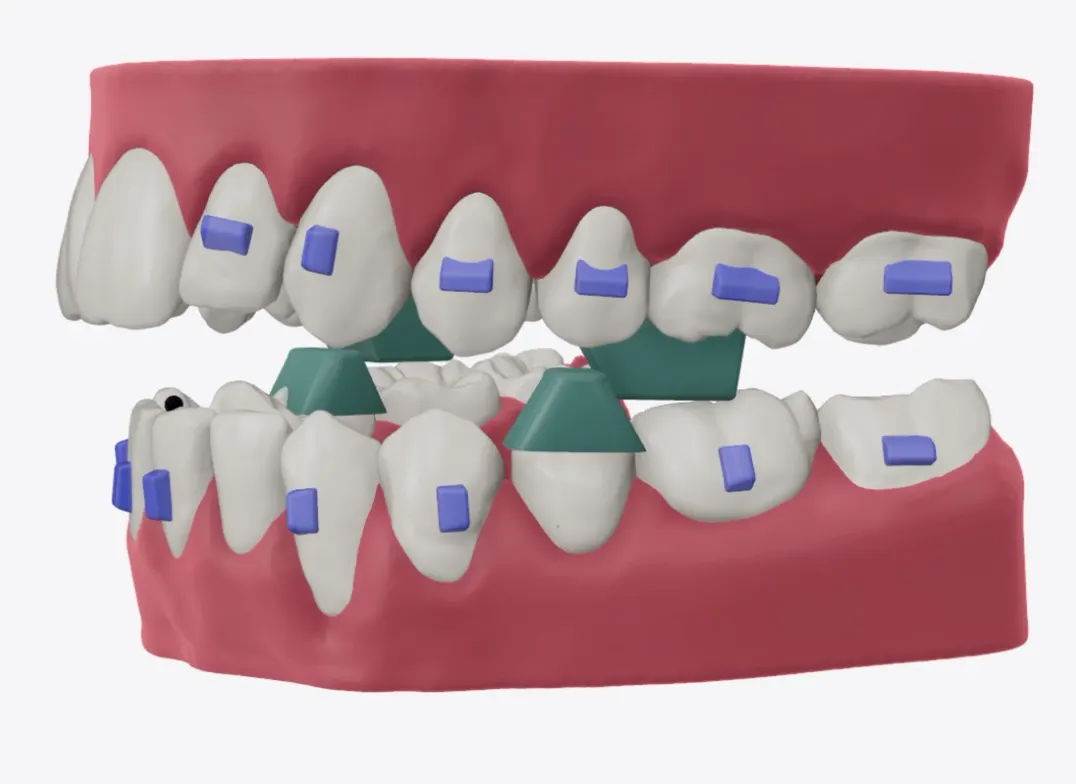
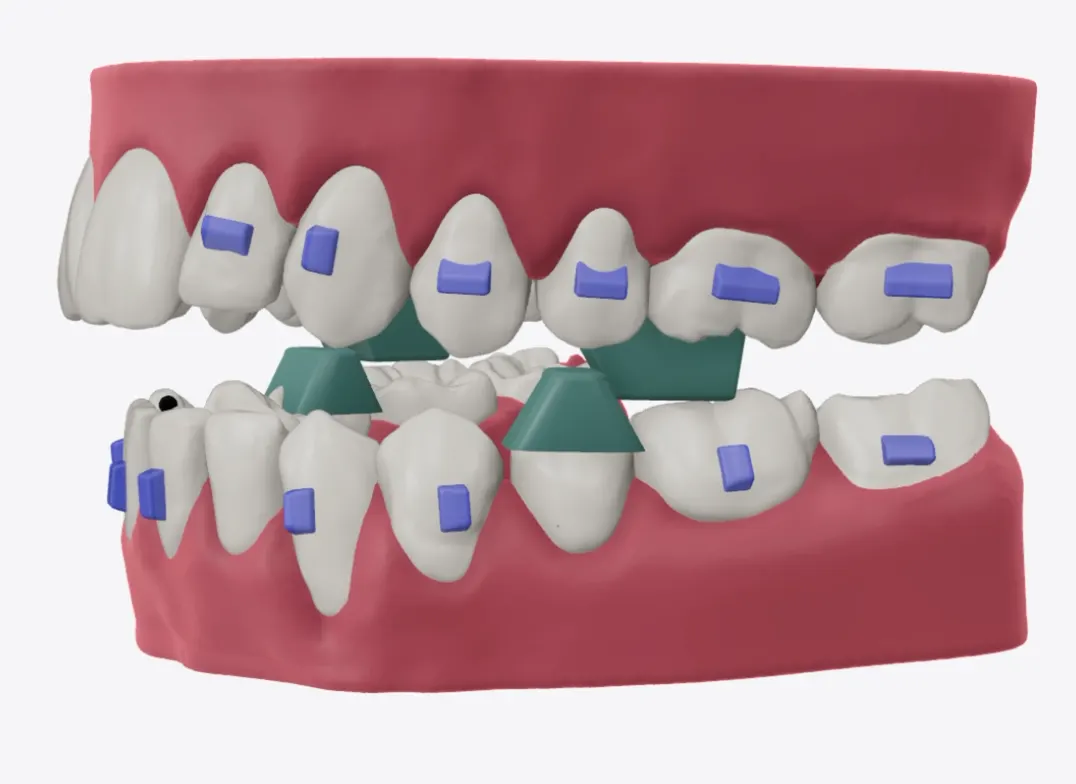
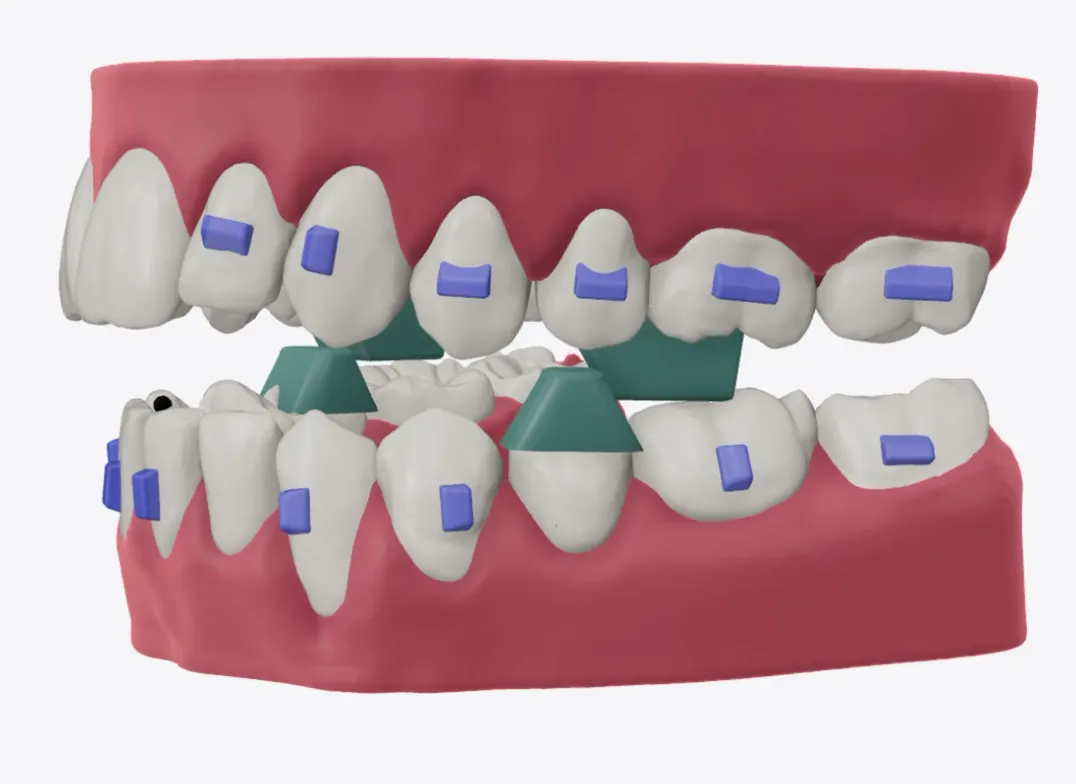
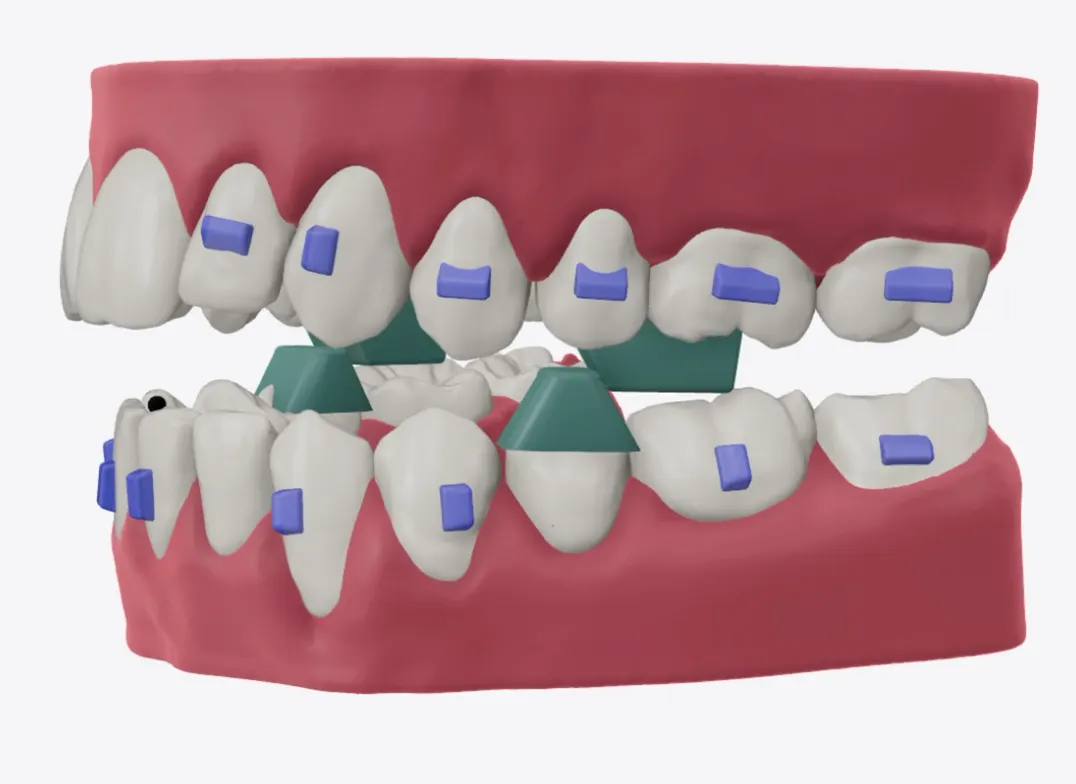
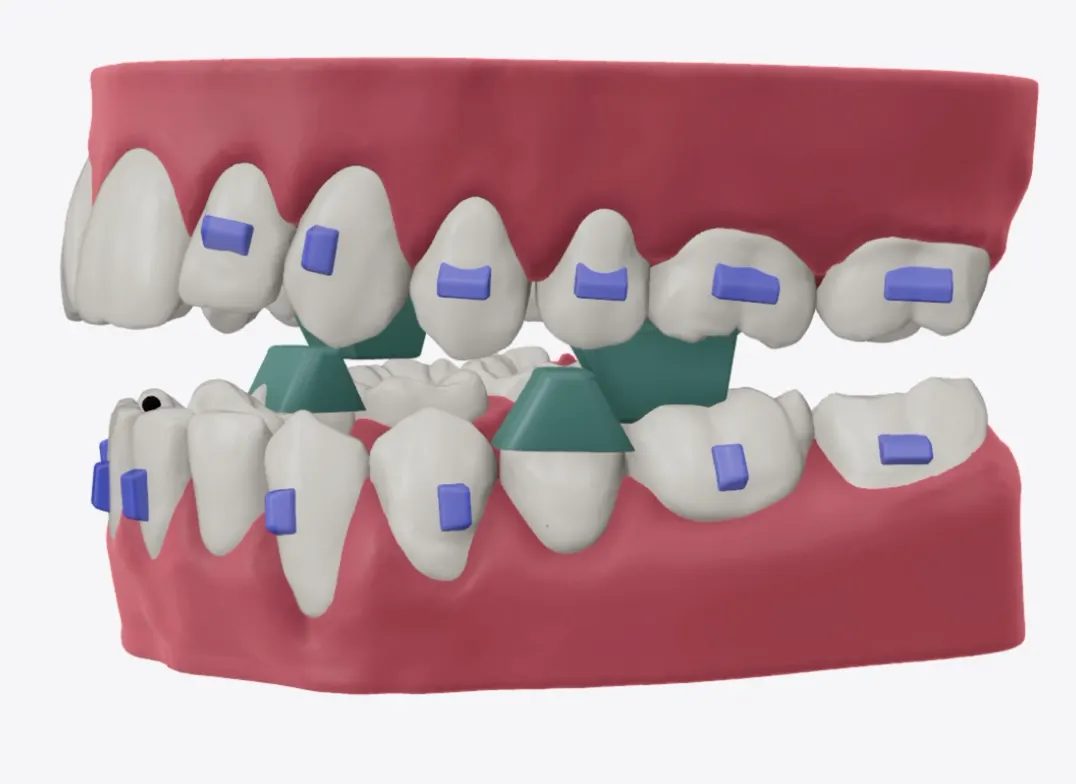
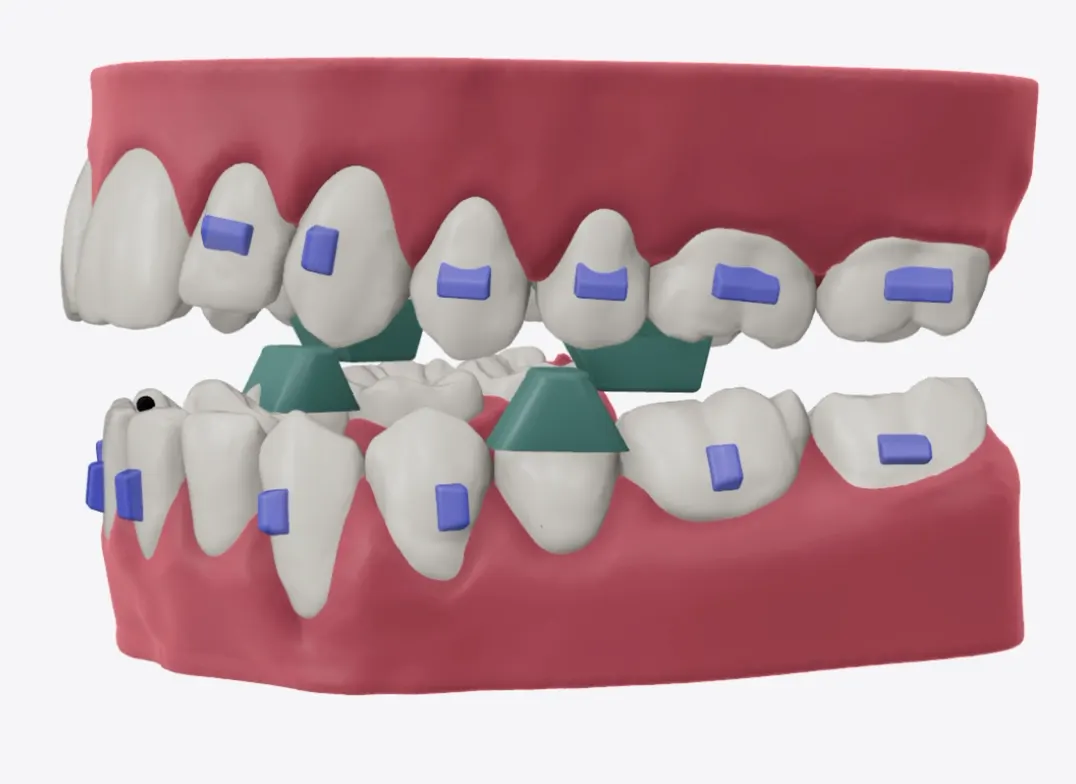
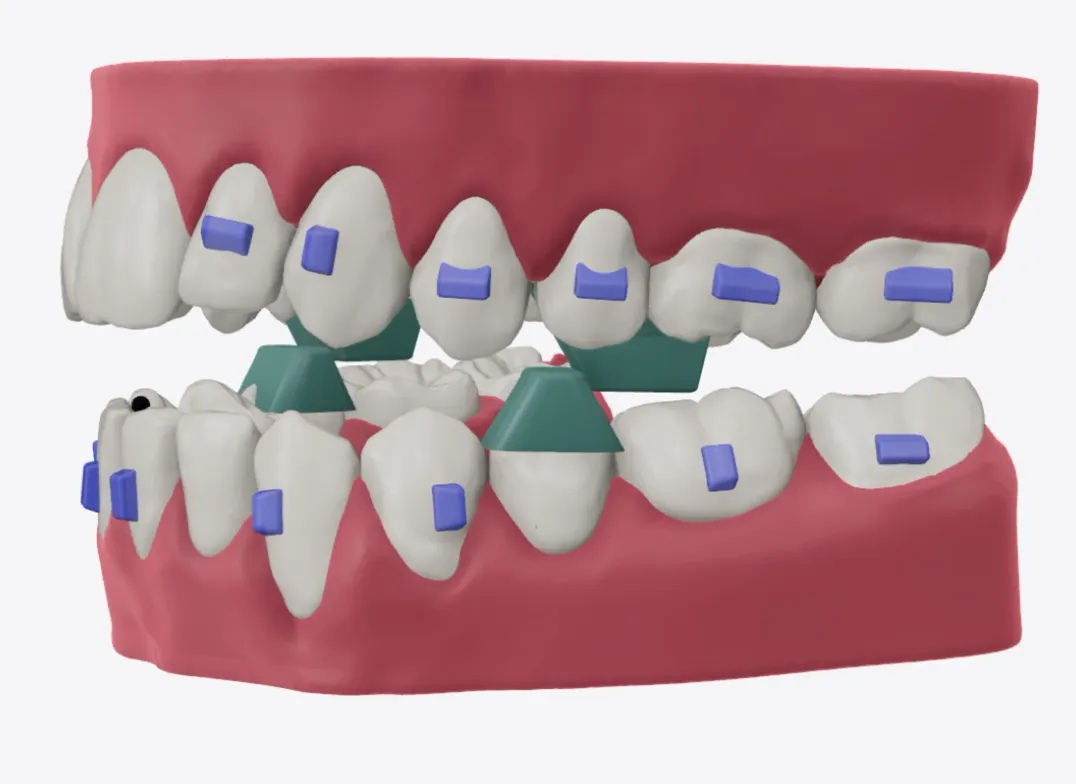
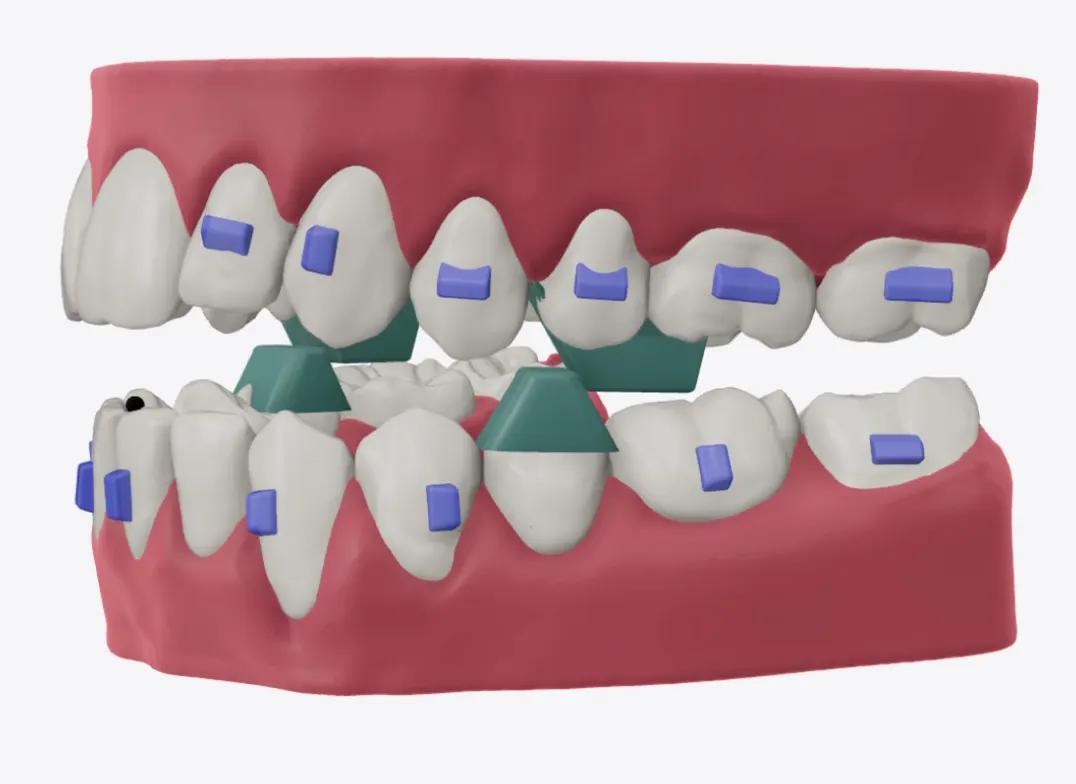
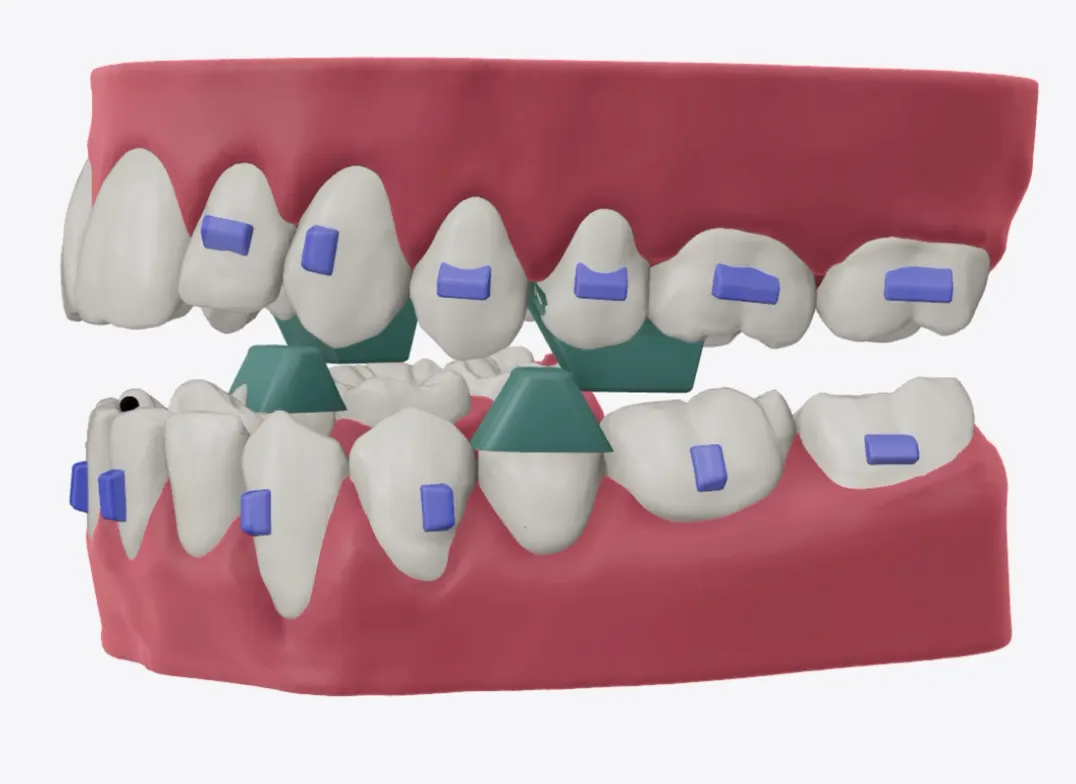
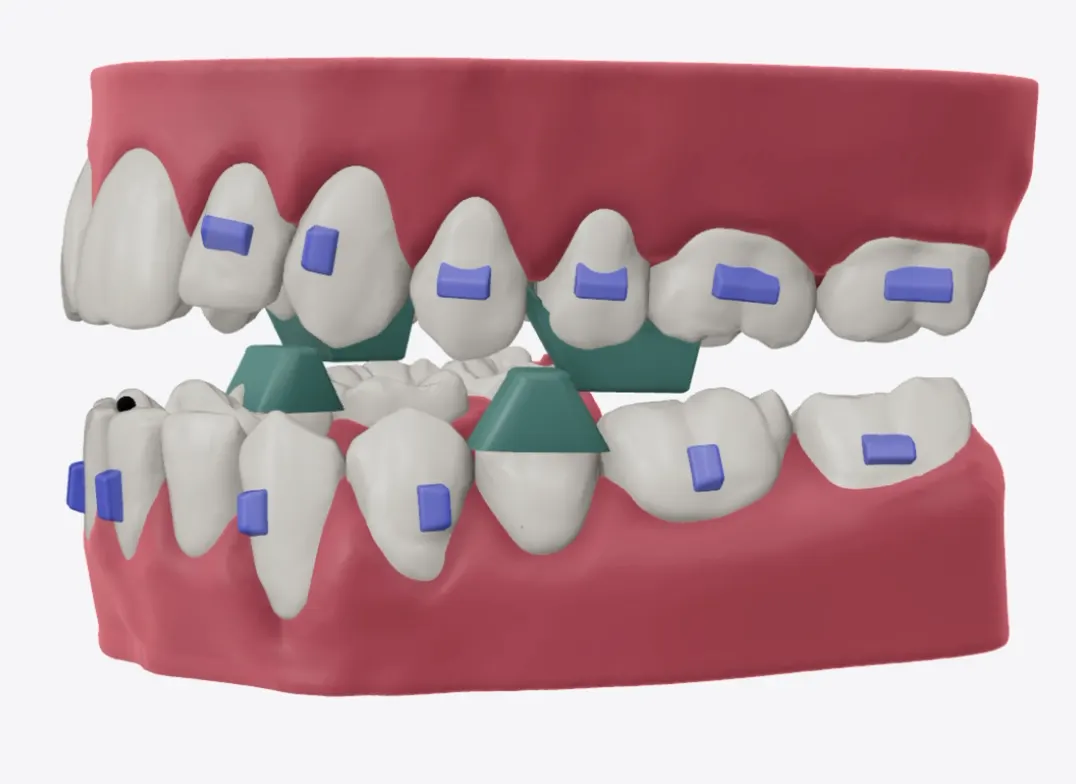
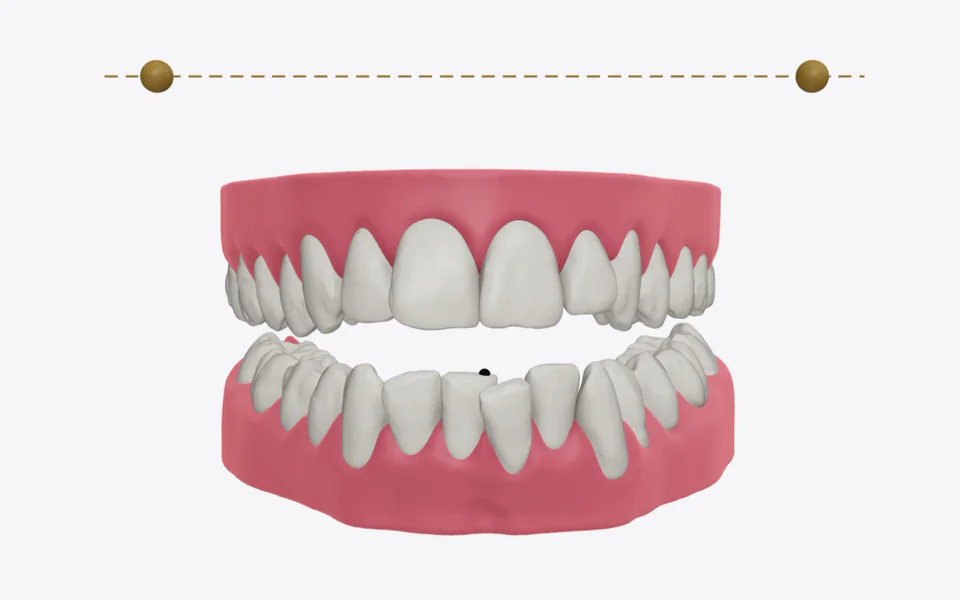
Construction bite.
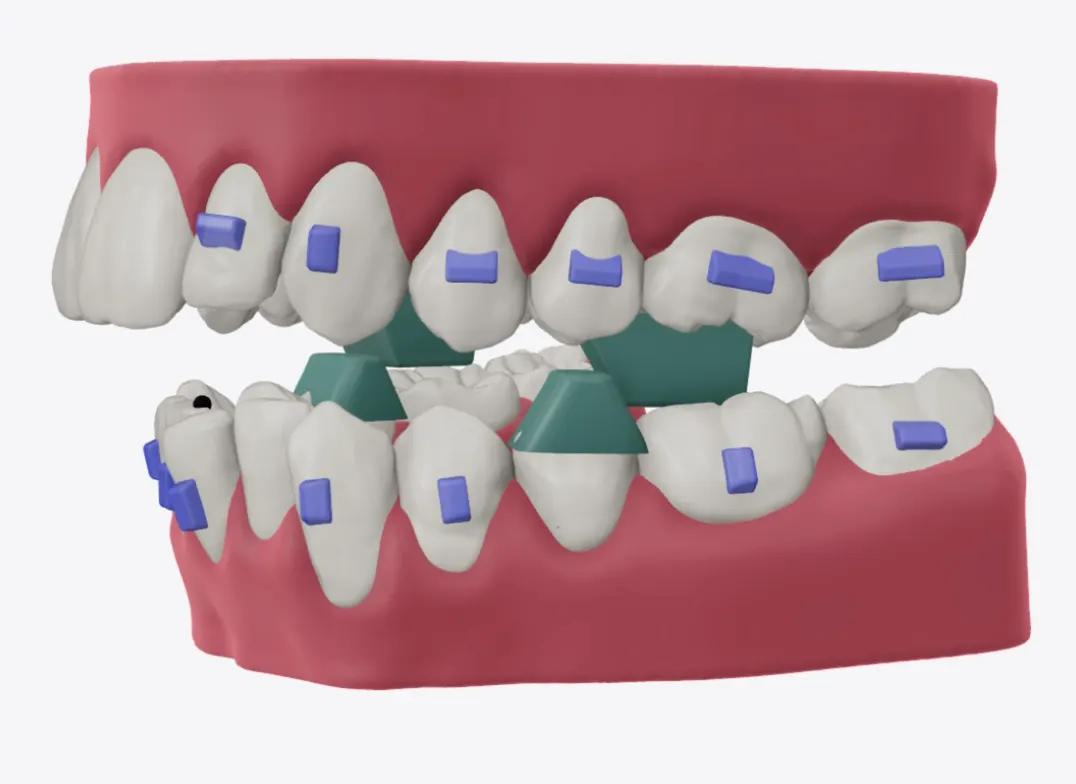
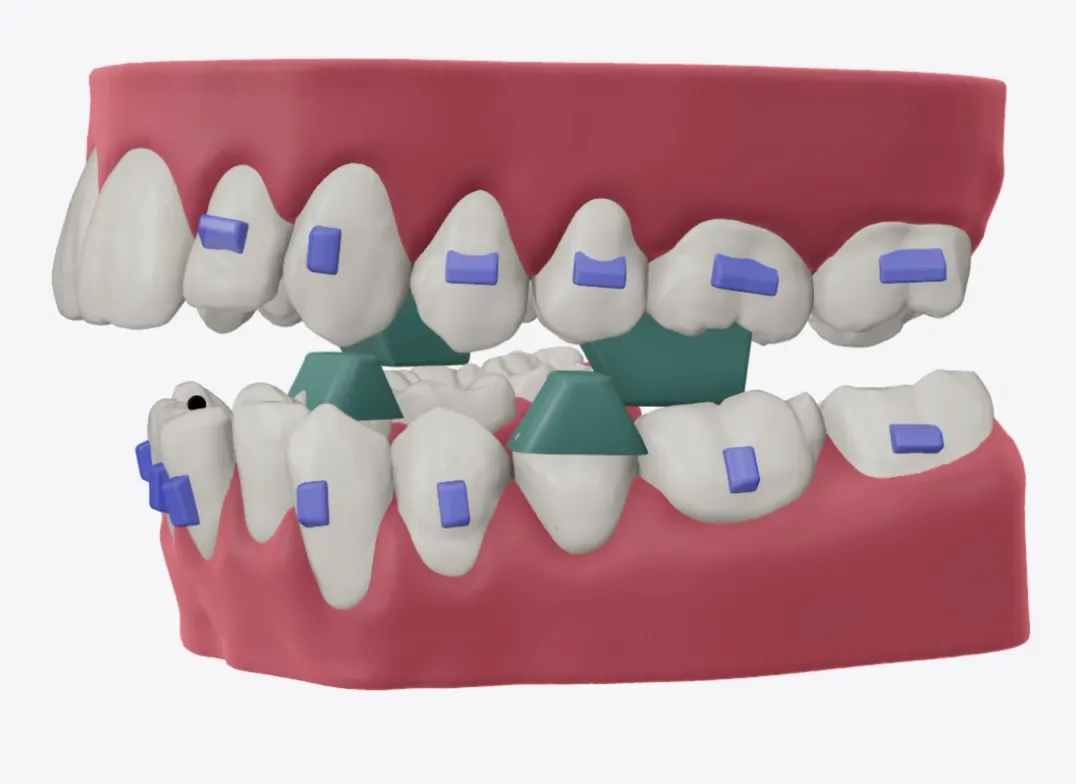
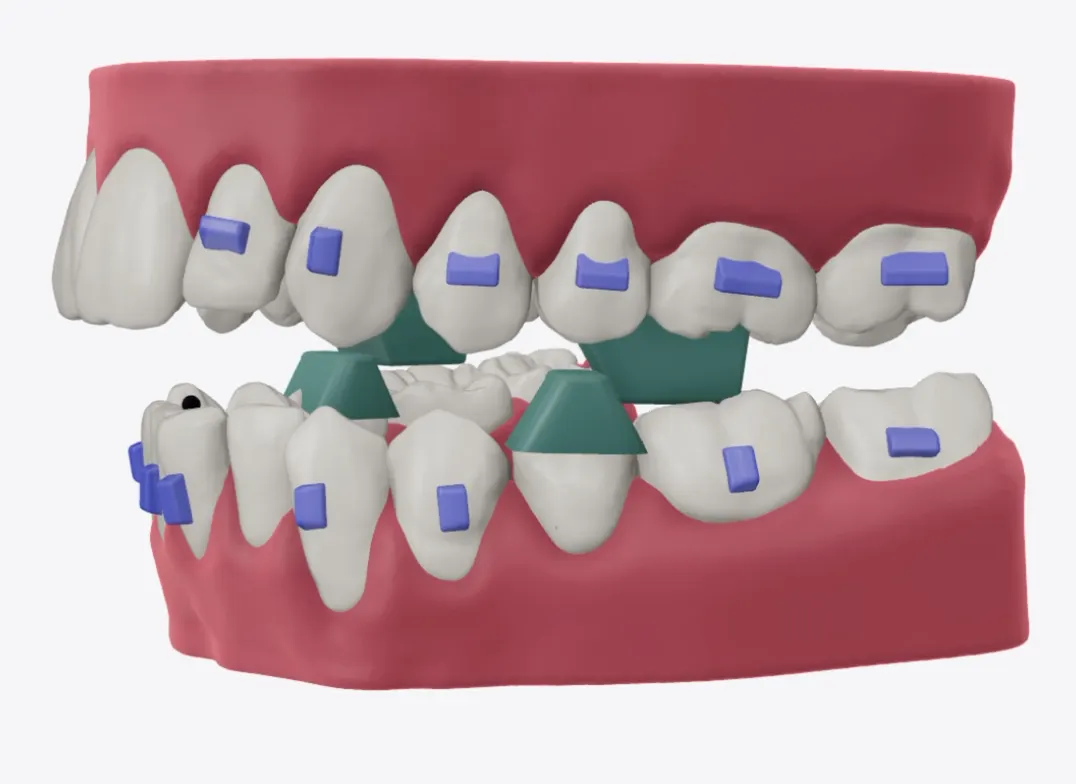
The mandible rotates around an estimated hinge axis: you set advancement, opening and lateral shift, the app reads the opening angle.
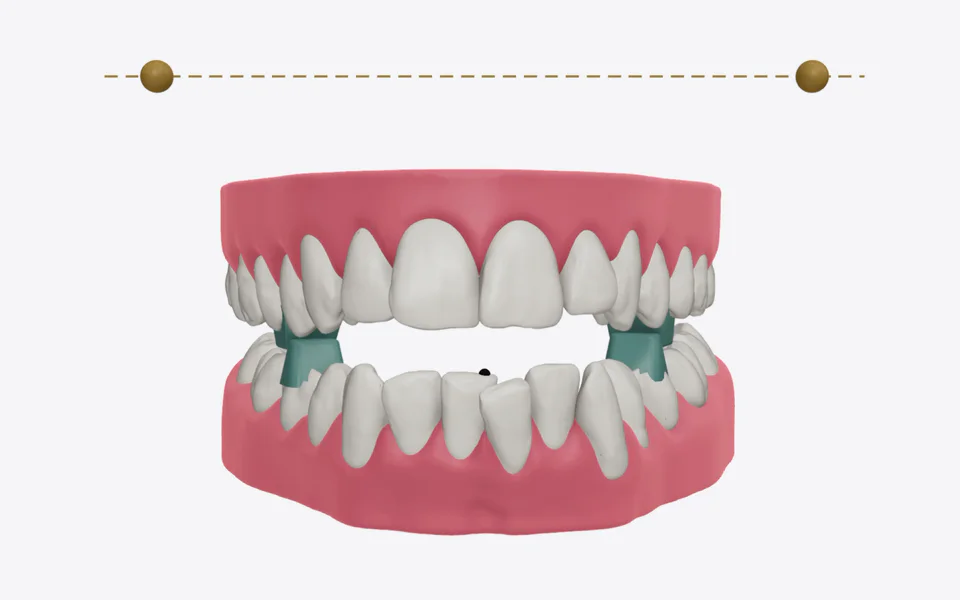
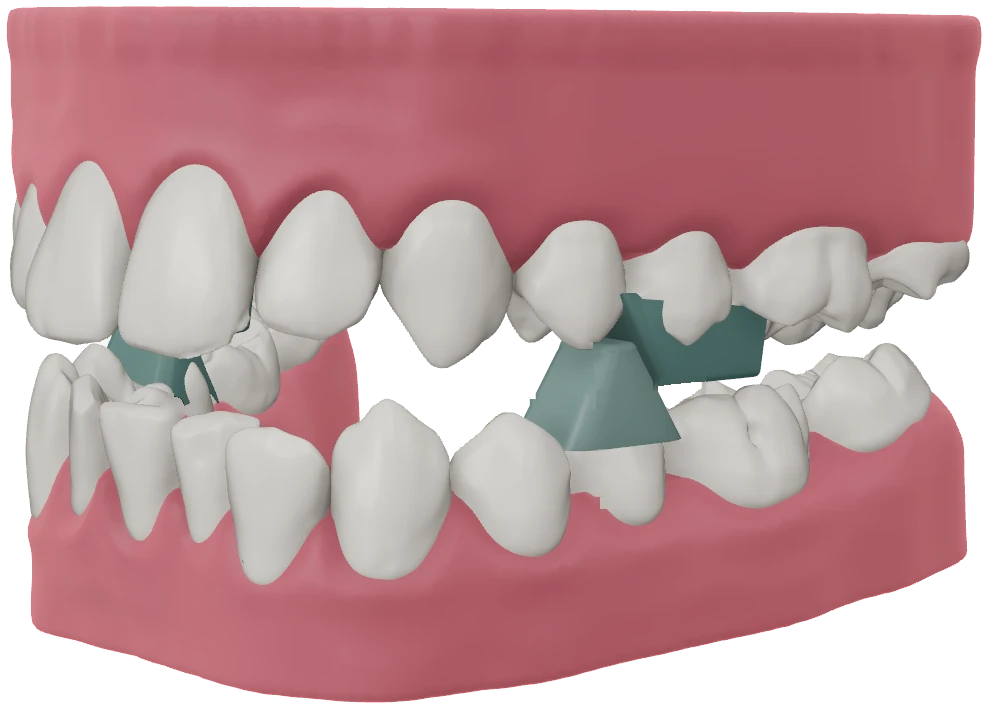
Occlusal blocks
automatically placed.
Lower blocks on the premolars, upper blocks on the molars, placed on Apply, adjustable to your preference.
Static or dynamic,
per aligner.
In the aligner, the advancement is either constant over a range of aligners, or spread over the steps.
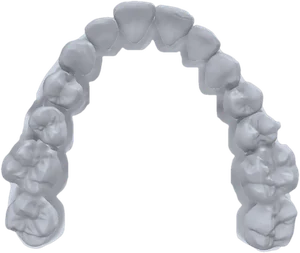
Print the models,
thermoform the sheet.
Biomechanics
Mandibular advancement, in six notions.
What the literature says about the aligner, the twin block and the mandible. One or two sentences per notion, with its source.
Aligner or twin block
Across 9 studies and 465 patients, aligner advancement and the twin block gave the same SNA, SNB and ANB changes; the aligner reduced the overjet 0.46 mm more and proclined the lower incisors 0.9° less.
Huang et al., BMC Oral Health 2026 · Sohn et al., Korean J Orthod 2026.Lower incisor control
Lower incisors moved back with aligner advancement and forward with the twin block and the Herbst, in 63 patients. With Class II elastics instead of blocks, they proclined 5.3°.
Wu et al., BMC Oral Health 2023 · Patel et al., Angle Orthod 2026.Mandibular length
Co-Gn grew 8.4 mm with the twin block and 8.3 mm with aligner advancement; the soft-tissue chin advanced 3.0 mm against 0.9. Two thirds of controlled samples gained more than 2 mm over the untreated.
Lombardo et al., J Orofac Orthop 2024 · Cozza et al., Am J Orthod Dentofacial Orthop 2006.Timing
Prepubertal patients (CVM2) showed dentoalveolar effects, pubertal patients (CVM3) skeletal effects, Co-Gn 5.8 mm a year. Started at the pubertal peak, the twin block added 4.75 mm a year of mandibular length, against 1.88 before.
Ravera et al., Eur J Paediatr Dent 2021 · Baccetti et al., Am J Orthod Dentofacial Orthop 2000.Dentoalveolar share
70 to 80 % of the overjet correction is dentoalveolar, the skeletal change 1 to 2 mm. Against no treatment, removable functional appliances reduced the overjet by 4.6 mm and ANB by 2.4°.
Salloum et al., Dental Update 2021 · Batista et al., Cochrane Database Syst Rev 2018.Wear, comfort and joint
The twin block was more noticeable (70 % against 25 %) and broke more often (50 % against 22 %) than the aligner version, in 68 patients. Across 18 studies, functional advancement did not increase joint symptoms.
Zybutz et al., Angle Orthod 2021 · Ding et al., BMC Oral Health 2022.FAQ
Common questions about mandibular advancement.
Design your first
advancement case.
Start your free trial. 30-minute live onboarding included, we design your first case with you.
Contact
Reply within one business day