Retention · Fixed and removable
Fixed and removable retainers,
ready in a few minutes.
Design your retainers in a few minutes. Your patients get them right after their appliances come off, so the result stays stable.
Runs in your browser. Nothing to install.
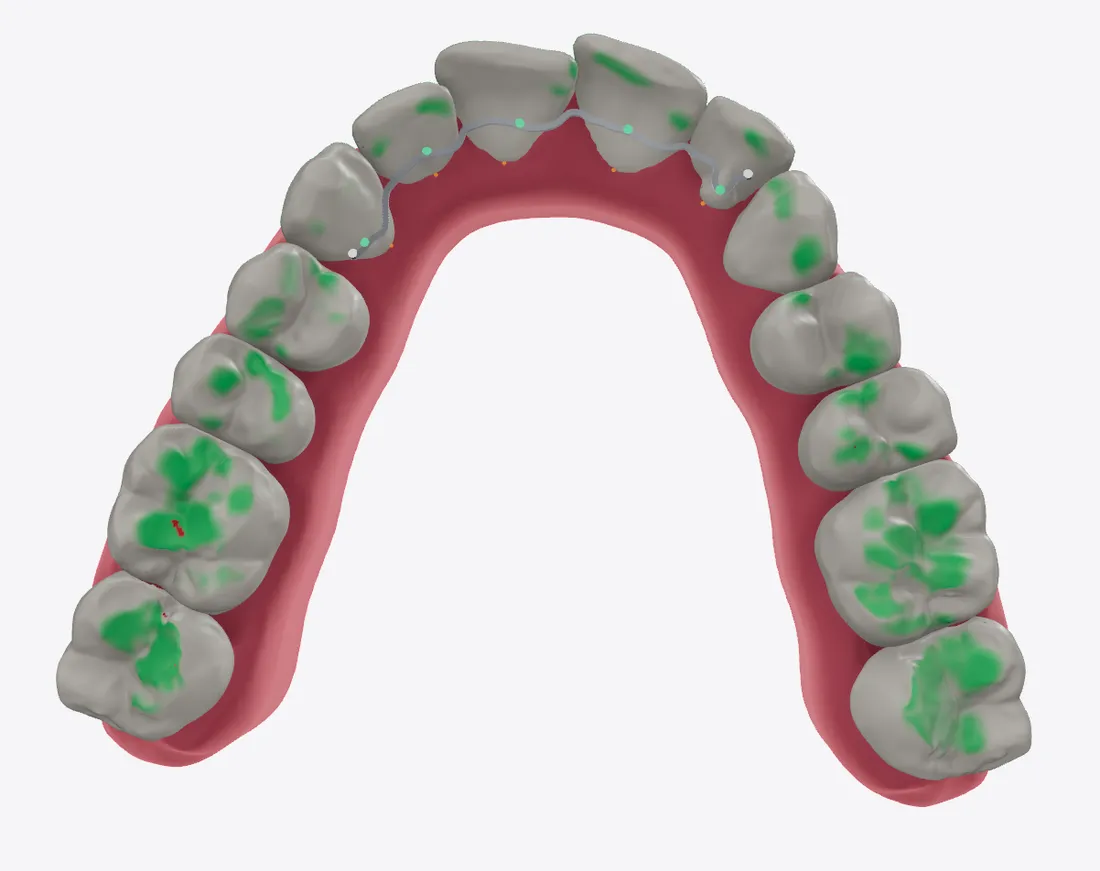
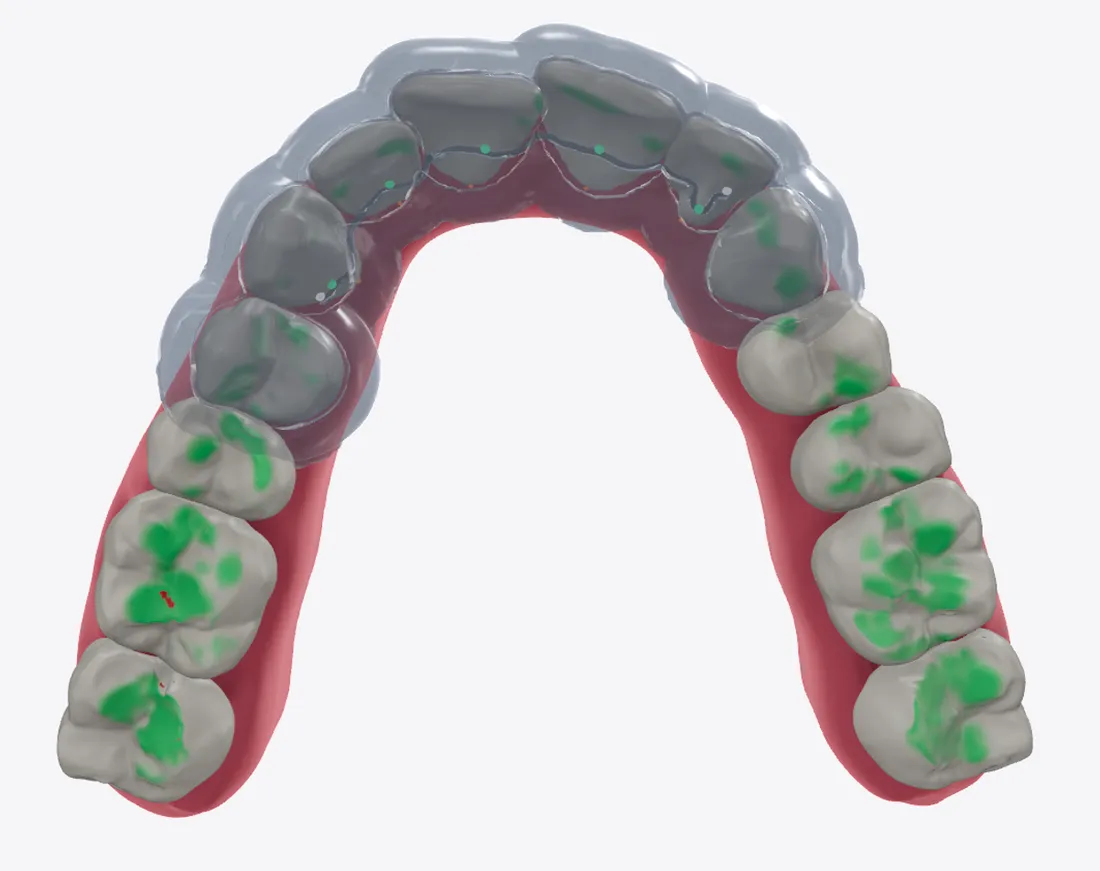
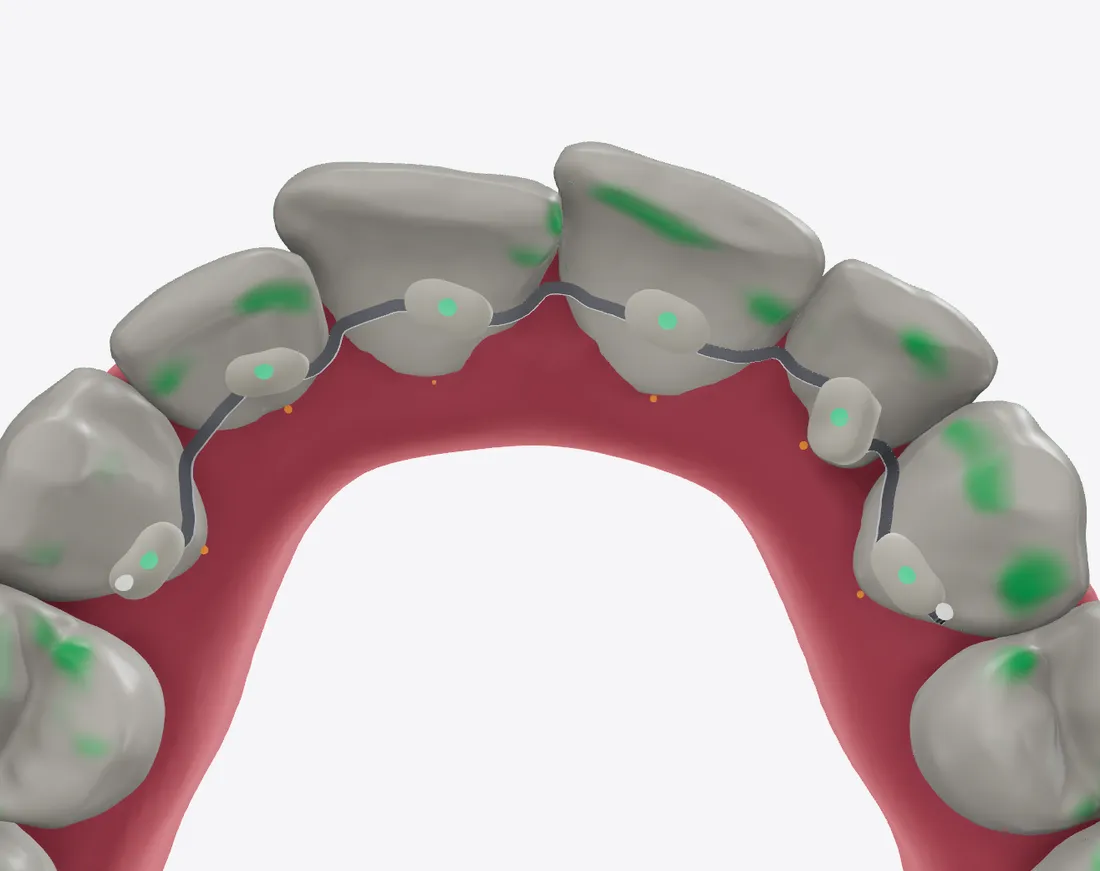
Bonded retainer wire,
automatically placed.
The wire follows the curvature of the arch and keeps clear of the opposing contacts. You move it if you prefer.
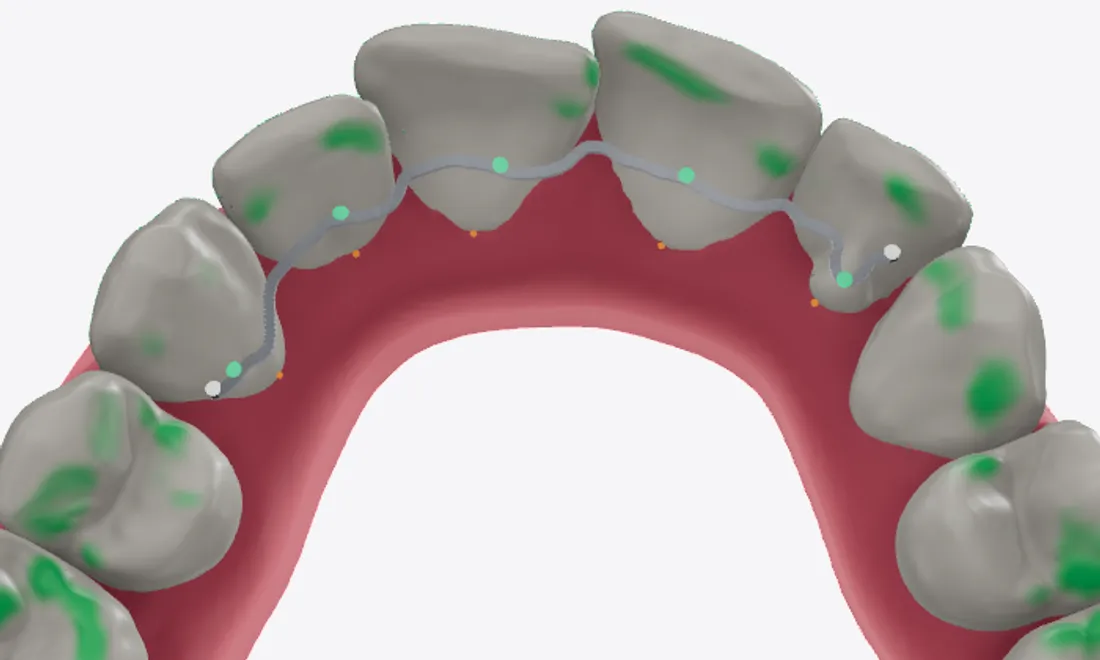
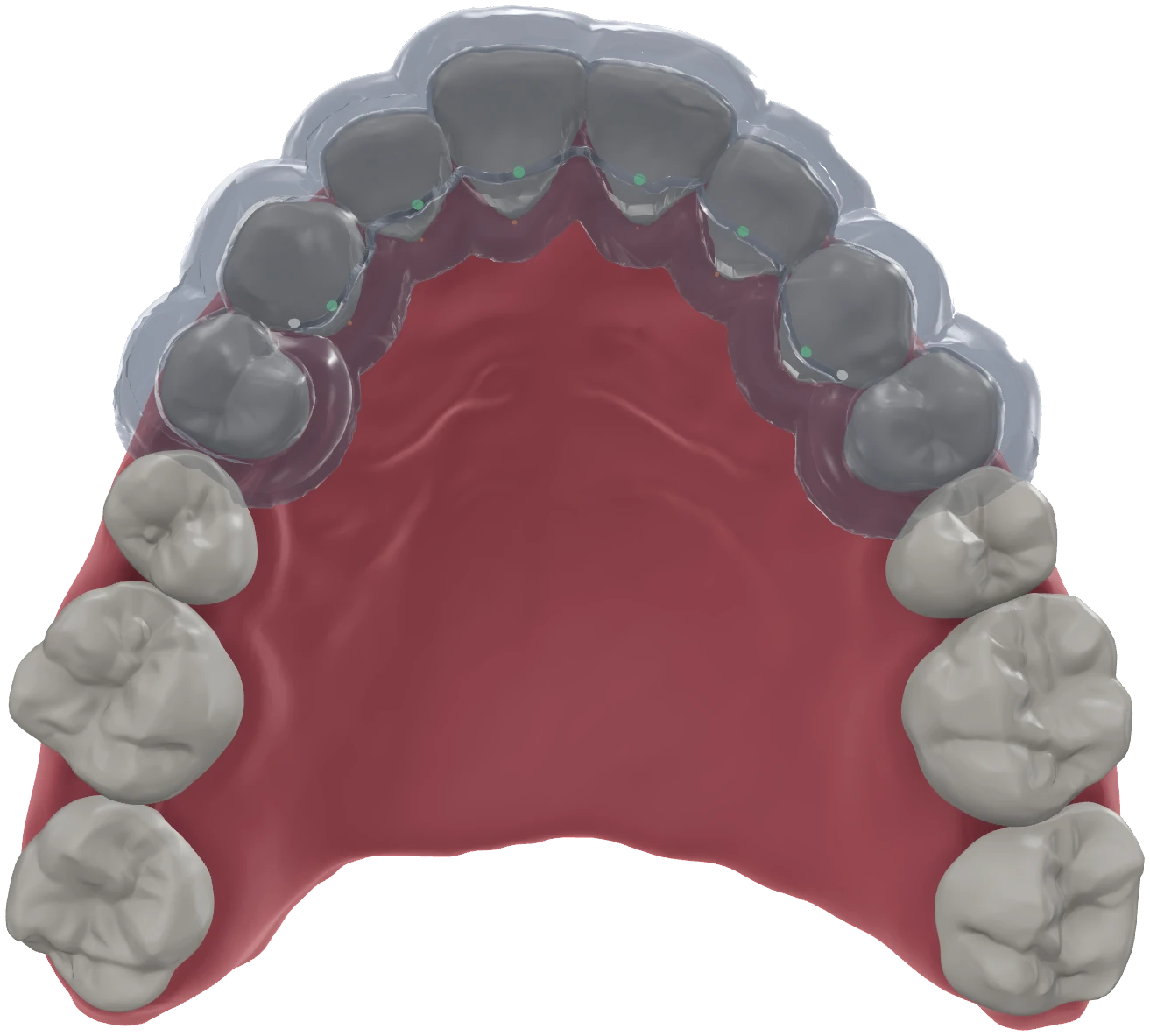
Space for bonding,
on the same model.
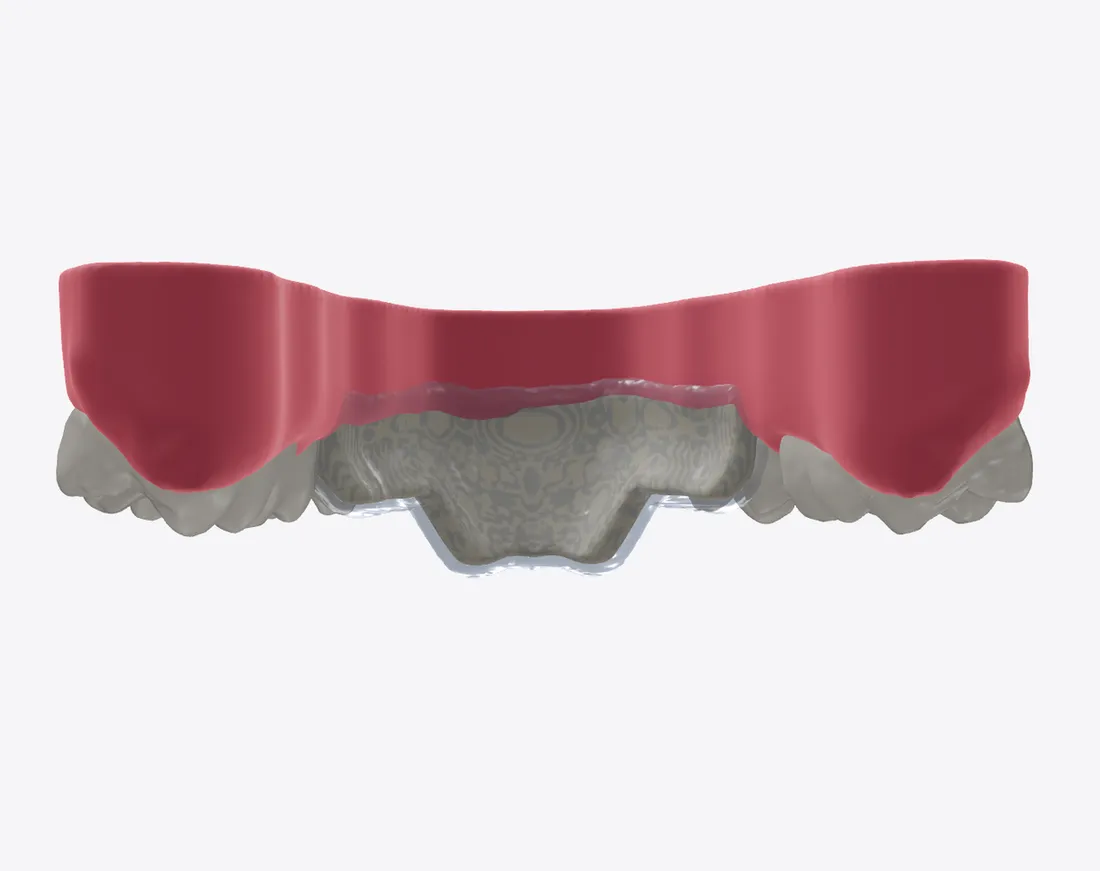
An option adds the space for the bonding composite, number and position computed on the wire. The retainer is then thermoformed on the same model, bonding included. So you don't have to take another scan for the thermoformed retainer.
Printed transfer key,
chairside bonding.
The key seats on the teeth and holds the wire in its designed position while you bond, in a few minutes.
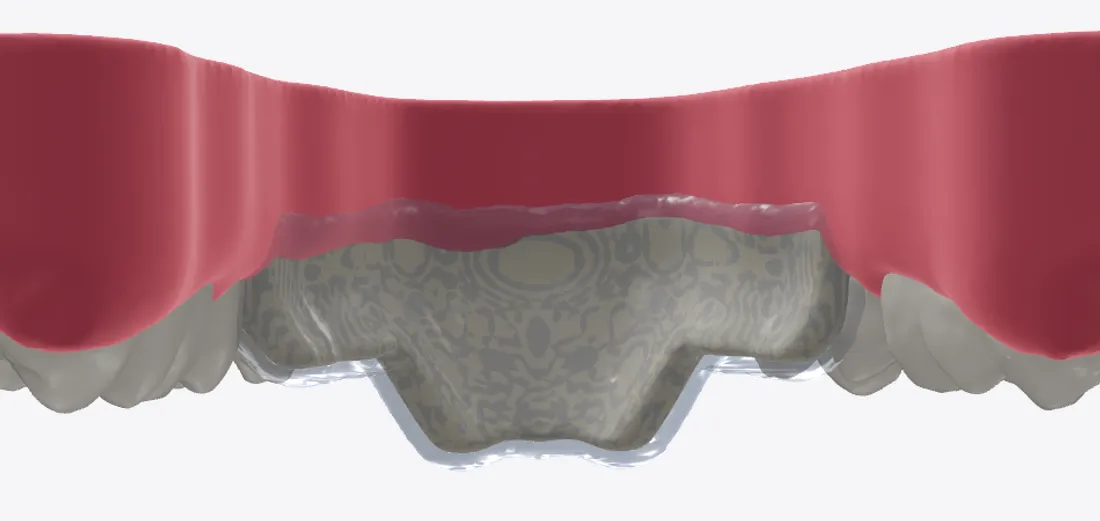
Smooth tongue guide,
thermoformed.
A ramp behind the upper incisors, built on the model and thermoformed into the retainer, clear of the lower teeth.
Print, bend
or thermoform.
Wire printed in titanium or cobalt-chrome, or bent in stainless steel or TMA on a bending robot. Models printed and thermoformed, sheet thickness chosen case by case. In-house or at your partner lab.
Evidence
Retention, in six notions.
What the literature says about bonded and removable retainers, their failures and their side effects. One or two sentences per notion, with its source.
Fixed or removable
Over 4 years, lower incisor irregularity was 1.64 mm higher with vacuum-formed retainers than with a bonded wire; the wire held the incisors better in the first 6 months, with no difference at 12 and 18 months. Across 47 trials, the certainty of the evidence remains low.
Al-Moghrabi et al., Am J Orthod Dentofacial Orthop 2018 · O'Rourke et al., Am J Orthod Dentofacial Orthop 2016 · Martin et al., Cochrane Database Syst Rev 2023.Failures
Multistrand retainers failed in 12 to 50 % of patients across 20 studies, 40 % within 2 years in one trial. Yet 98.9 % of lower retainers were still in place 10 to 15 years after debond.
Iliadi et al., J Dent 2015 · Egli et al., Am J Orthod Dentofacial Orthop 2017 · Kocher et al., Prog Orthod 2019.Indirect bonding
Bonding the lower retainer with a transfer key took 80 seconds less than direct bonding, with the same failure risk at 6 months, 2 and 5 years. Unexpected tooth movements were seen only after direct bonding.
Bovali et al., Am J Orthod Dentofacial Orthop 2014 · Egli et al., 2017 · Cornelis et al., Am J Orthod Dentofacial Orthop 2022.Unexpected movements
An intact wire can still move teeth: a torque difference between two incisors, or a canine tipping, in 38 of 3,500 patients. The wire must be passive when bonded; in vitro, no wire stayed passive after loading.
Kučera & Marek, Am J Orthod Dentofacial Orthop 2016 · Shaughnessy et al., Am J Orthod Dentofacial Orthop 2016 · Sifakakis et al., Biomed Tech 2015.Wire and material
A 5-strand 0.0215-in wire is the classic recommendation; a rigid wire bonded to the canines alone lets the incisors relapse. CAD/CAM nickel-titanium retainers matched steel for stability and survival; in vitro, cobalt-chrome restricted horizontal tooth mobility more (75 %) than multistrand wire (44 %).
Zachrisson, Am J Orthod Dentofacial Orthop 2015 · Störmann & Ehmer, J Orofac Orthop 2002 · Gelin et al., Korean J Orthod 2020 · Roser et al., Eur J Orthod 2024.Periodontal health
Across 29 studies, fixed retainers were compatible with periodontal health. At 12 months, bonded retainers gathered more plaque and calculus than vacuum-formed retainers, without clinically significant harm.
Arn et al., Am J Orthod Dentofacial Orthop 2020 · Storey et al., Eur J Orthod 2018.FAQ
Common questions about retainers.
Design your first
retention case.
Start your free trial. 30-minute live onboarding included, we design your first case with you.
Contact
Reply within one business day